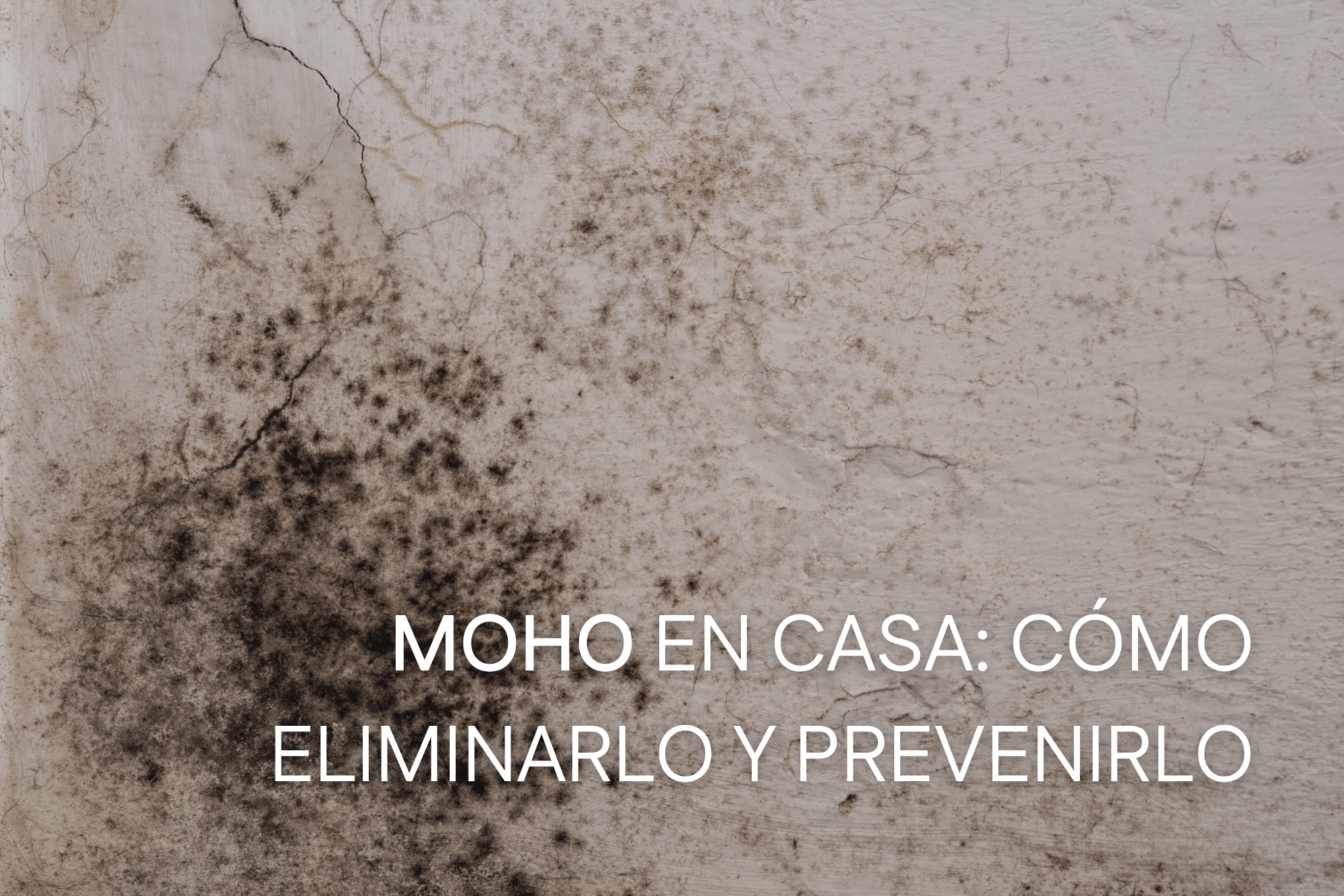
When mold appears in a home, It is often perceived as an aesthetic problem.: black spots in a corner; behind a closet; around a window.
But mold is not just a matter of appearance. It's a sign that something is not working right..
healthy house: how mold affects your health
Mold not only deteriorates materials, but it also directly affects those who live in the home.
Spores present in indoor air can cause:
- – Allergies
- – Respiratory irritation
- – Fatigue
- – Headaches
- – Worsening breathing problems
A healthy house can't live with mold.
That's why, when it appears, the important thing is not to clean it, but understand why it is there.
Bioarchitetura: The source of the problem is always humidity.
Mold does not appear by chance, There is always excess humidity behind and not all humidity is the same.
- – Capillary humidity
It occurs when water from the ground rises through porous materials. (piedra, brick, mortar). It is common on ground floors or old buildings..
- – Condensation humidity
Appears when water vapor in the air comes into contact with cold surfaces. Very common in poorly ventilated homes or with thermal bridges.
- – Moisture through filtration
Water enters from the outside due to construction defects. Covers, poorly resolved facades or encounters.
In bioarchitetura, Correctly identifying the origin is the first step. Because if you don't eliminate the cause, mold always comes back.
How to remove mold correctly (without reappearing)
Before cleaning anything, you have to act with judgment. The general process would be:
- 1. Eliminate the cause of humidity
- 2. Reduce humidity in construction elements (Intense ventilation, moderate heating or occasional use of dehumidifiers)
- 3. Professional sanitation (removal of fungi and spores)
- 4. Cleaning and vacuuming contaminated surfaces
- 5. Air filtration with HEPA filter
- 6. Control inspection
An option to get rid of mold yourself, it is with treatments based on boron salts or potassium boric salts, such as the so-called "Canadian solution" marketed by the Italian company Durga, among other manufacturers. You can share it here. But this only works for mild and superficial cases of mold..
Sustainable architecture: how to prevent mold from coming back
Once the problem is resolved, the key is in prevention. Some simple measures:
- – Maintain indoor humidity below 60%
- – Ventilate several times a day (better with cross ventilation)
- – Ventilate after cooking or showering
- – Avoid gluing furniture to cold facades
But there is one more aspect.
The problem of materials that do not breathe
Nowadays, most conventional materials are practically plastic: seal, waterproof and block natural moisture exchange.
Resulting in walls that cannot regulate humidity.
In a traditional home, the materials were breathable. Humidity could be balanced naturally.
But in a current home, many times it gets trapped and mold appears there.
At Hababibio we can advise you if you are going to carry out a work or renovation so that it is as healthy as possible., you can find more information at this link.
Bioarchitetura: design homes that regulate humidity naturally
The bioarchitetura proposes a different approach, designing homes that:
- – Use breathable materials
- – Regulate humidity naturally
- – Avoid condensation
- – Maintain a stable hygrothermal balance
When mold appears, something is not working right.
Sometimes they are habits. Other times, constructive decisions.
But it is always an opportunity to review the space and transform it..
So if you have humidity at home that you have to treat, take advantage of using natural materials
A healthy home is not a whim, It is the new standard for those who live with conscience.
A hug,
Carmen Vazquez
Bioarchitect and founder of Habitabio