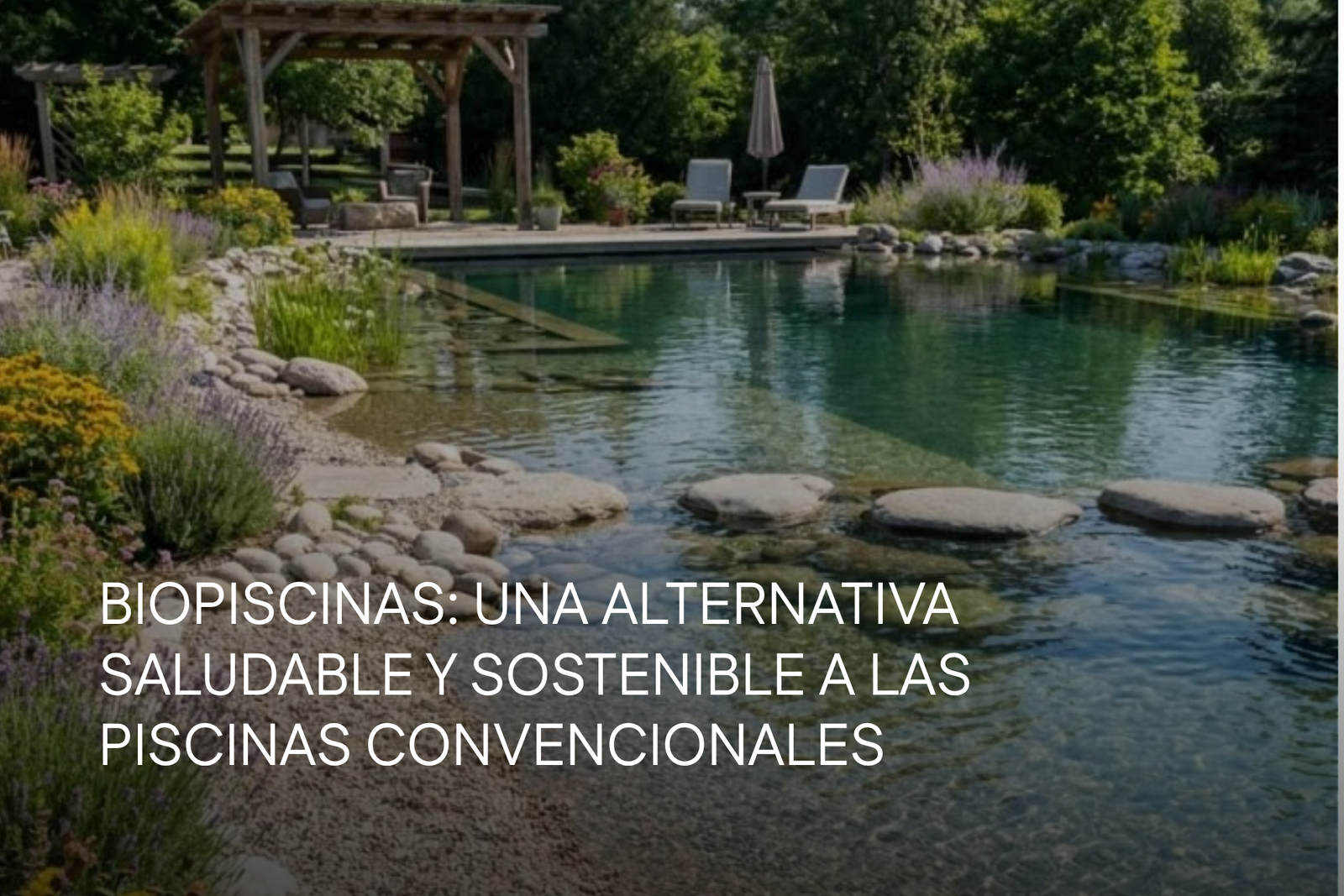
Have you ever swam in a lake or a crystal clear river? Without the artificial smell of chlorine, with the softness of water free of chemical treatments and in balance with nature.
This is what happens in a biopool., a sustainable pond that functions as a small living ecosystem.
Water balance is achieved naturally, with aquatic plants, Beneficial microorganisms and carefully designed regeneration zones.
In countries like Austria - where they were created in 1985-, Germany and England, The construction of biopools is widespread, and in recent years they have begun to become more and more known in other parts of the world., as Spain, Mexico or Chile.
In this article we are going to enter the world of biopools, to understand how they work, discover its benefits and end with 3 places in Spain where you can swim in them and enjoy the experience.
Nuestra Newsletter
Sign up and you will receive an email with Reflections, Learning and experiences of my path like bioarchitecta and entrepreneur conscious. I accompany you to create a most consistent life, One more house healthy and a project with purpose.
We are already a community of thousands of people committed to better inhabiting this world, in harmony and with ourselves. Do you join?
Table of contents
What is a biopool and why is it a healthier alternative??
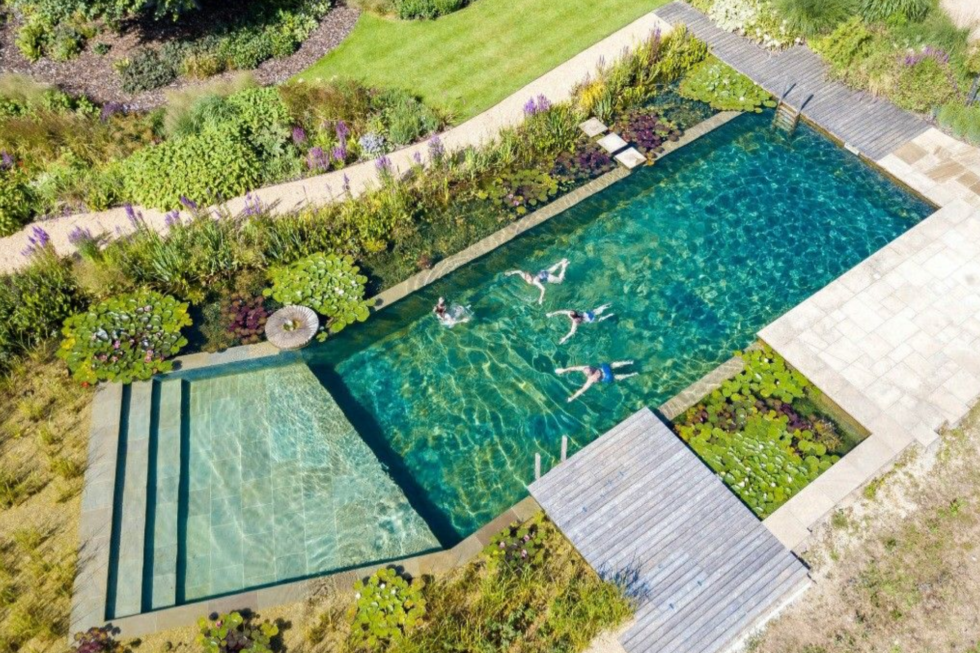
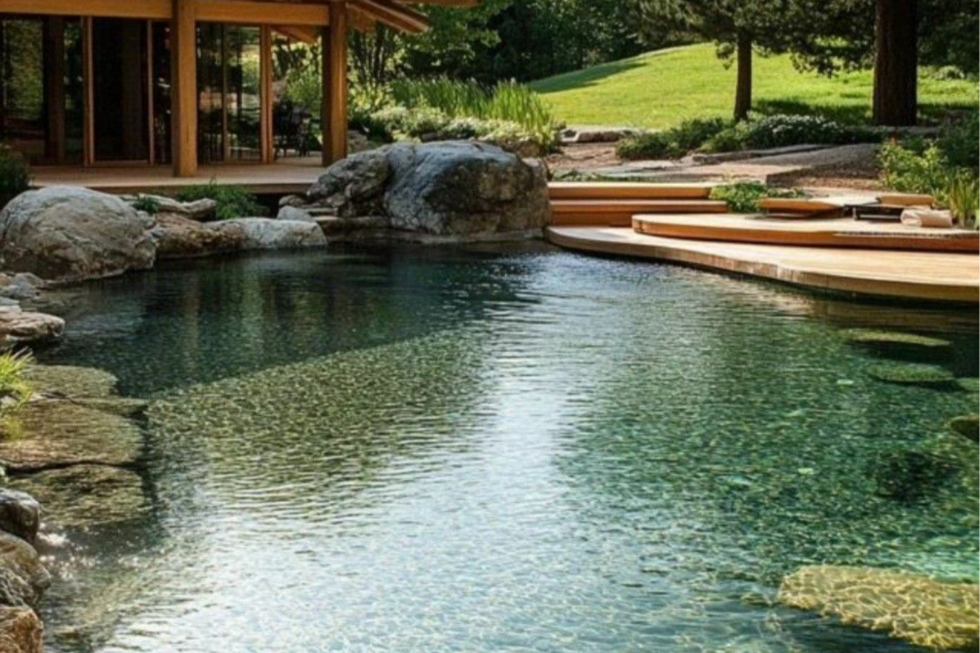
A biopool is a ecological pool that reproduces the ecosystem of a natural pond.
Although there are different systems to achieve this, and must always be adapted to the climate and conditions of the place, There is something that they all have in common and that is that They keep the water clean without any chemical treatment.
So, instead of eliminating life - like chlorine does- it is achieved that it is life that purifies the water.
As explained in the book How to Build a Natural Swimming Pool, by Andreas Thon - natural pool expert and professor at the Bernburg University of Applied Sciences, Germany- and Wolfram Kircher -landscape architect and advisor on the construction of biopools-:
"The secret lies in divide the space into two areas. A deep swimming area free of vegetation offers space to swim, while one regeneration area with plants takes care of cleaning; It is a pool filtered by plants, not by chemicals.
Only biological processes are involved—no chlorine, sales, ozone or UV rays—, hence, when leaving the water, you feel fresh instead of irritated or dry from chemicals. Besides, In a well-balanced pool it is never necessary to change the water; It is enough to replace what is lost through evaporation”.
How a biopool works (without chlorine or chemicals)
The crystal clear and healthy water of a natural pool does not imply the absence of life; on the contrary, is he result of enormous biological activity, mostly invisible to the human eye.
As explained in the EcoHabitar magazine: “The different natural pool systems are based on the mechanism by which aquatic plants “They accelerate the growth of beneficial microorganisms that eliminate bacteria and keep the natural pool clean enough to meet the strict water quality criteria in Europe.”
These are the biological processes that keep water clean and crystalline
If we go into detail and want to understand how water purifies itself, hay 3 processes that we must take into account - and that are detailed in the book How to Build a Natural Swimming Pool:
1 – El biofilm: the debugging factory. On any submerged surface—gravel, plant stems or even the coating—a thin film composed of bacteria forms, started, fungi and small consumer organisms. Its branched structure creates a large adsorption surface that traps and digests dissolved nutrients, germs and contaminants. If this film is applied on a gravel filter bed through which water circulates, you get the main engine of the entire pool.
2 – A self-regulating balance. Floating green algae feed on sunlight, while water fleas (*Daphnia*) and copepods (*Cyclops*) They feed on these algae. A newly created pond usually turns green for a few weeks, but becomes clearer as the population of consuming organisms increases; from that moment, The system self-regulates and maintains crystal clear water without the need for external intervention.
3 – Deprive algae of food, thanks to the plants. The key to achieving crystal clear water is keeping nutrient levels—especially phosphorus—extremely low., thus preventing the uncontrolled proliferation of algae. Plants and their mycorrhizal fungi absorb these nutrients; some species even release compounds that inhibit the growth of harmful algae and bacteria.
4 – Greater depth for cooler water: in warm climates with lots of sun in summer, It is recommended that the pool be deeper, at least in some points, so that the water is fresh. In the deeper areas the sun does not penetrate as much and thus the temperature is maintained better.
Benefits for the planet and for you
By not using salt or chlorine, The natural pool does not irritate the skin and gives us a feeling of real connection with nature.
And furthermore, It has multiple benefits for the environment, between them:
- – Favors the pollinators and to the aquatic life
- – Integrates naturally in gardens and patios
- – Create one pond-like ecosystem which includes a bathing area
If we talk about budget, Although the installation of a conventional pool and a natural pool can cost the same, then the maintenance cost of a biopool is lower, for very simple reasons:
- – No need to buy chemicals, pool cleaners or other cleaning devices,
- – No need to change the water, only the water that evaporates is replaced. This means that you do not have to empty it in winter nor will you have green water.. It lasts all year round and makes your garden, land or field is more fertile and more alive because there is more biodiversity.
In addition, If you have a rainwater tank, you can fill the pool with the water you have collected from the rain. This is a project to plan ahead of time., so you can have your water reserve at the time of filling it.
Of course, we will always recommend you that a pool of these characteristics be built by a professional, for good design, execution and subsequent advice.
3 biopools in Spain
Do you want to try what swimming feels like in a biopool?, free of chlorine and chemicals?
We have gone out to look for recommendations of places in Spain where you can go to experience the sensation and here we bring them to you:
1 – Sabinares of Arlanza, Bioclimatic Rural Hotel in Burgos
– It has a natural pool for guests staying at the hotel from May to September.
2 – Beturia Road, rural accommodation in Badajoz
– With capacity for groups of up to 18 personas, which can also be rented by rooms. It has an ecological pool with views of the forest.
3 – Can Buch Eco Hotel, in Girona
– Hotel in a 16th century farmhouse restored with sustainable architecture principles. It has a natural pool 14 meters in length where you can enjoy nature outdoors.
AND IF YOU HAVE LEFT WANTING MORE ↓
Do you want to discover more alternatives and solutions to create a healthier home?
Biopools are just one of the many examples of how it is possible to design spaces that take care of people and nature..
In our Casa Sana program you will learn to recognize materials, solutions and systems that exist today to create or transform your home or project into a healthier space, natural and toxic free, making decisions with judgment and confidence.
Registration for Casa Sana will reopen in October!!