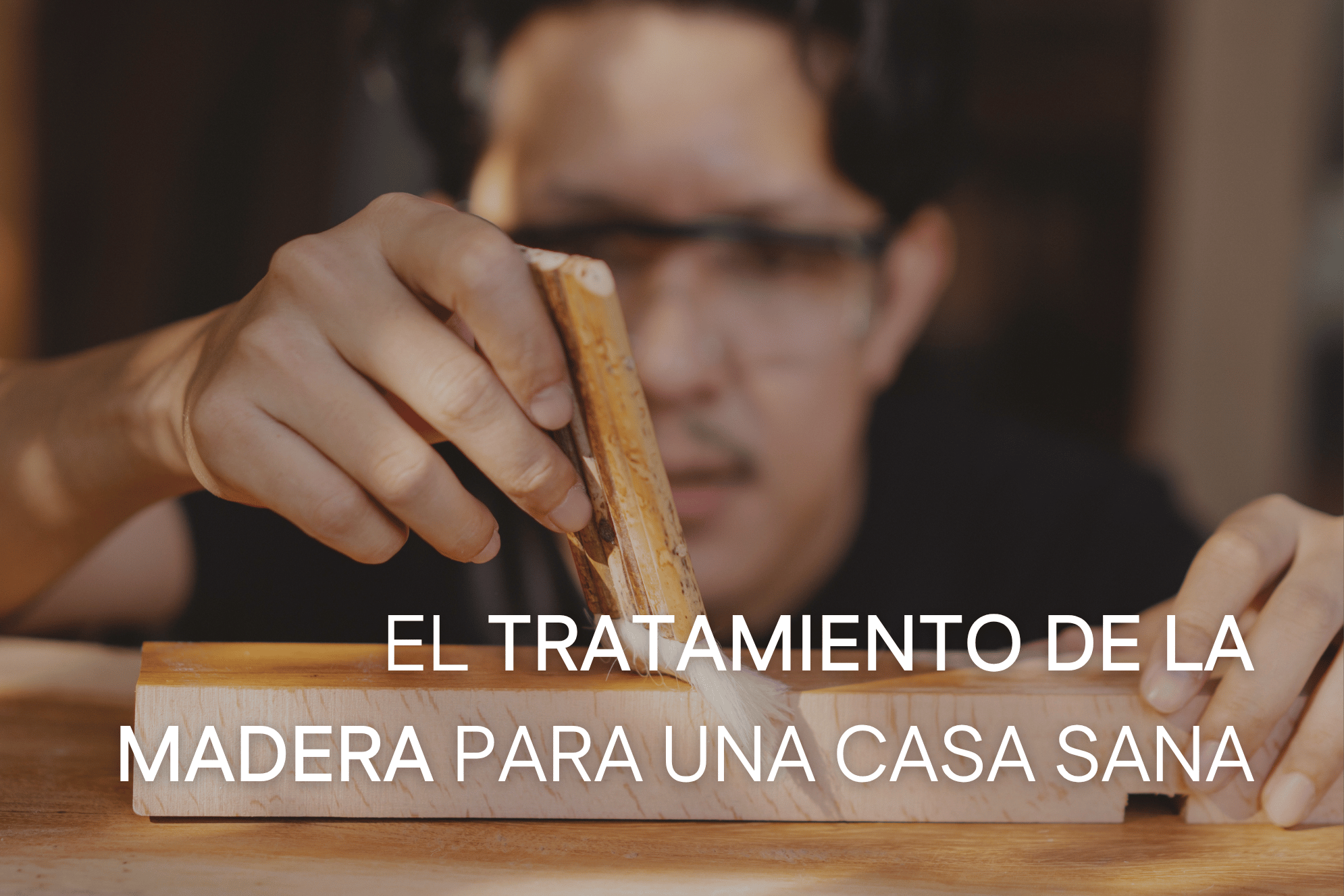
When we talk about wood in a home, many people assume that it always has to be treated: Varnish it. seal it. “Protect her”.
But the truth is that it is not always necessary.
In fact, in many cases, the best treatment for wood… is none.
And understanding this is key if you want to design a healthy house from coherence.
Natural wood in sustainable bioarchitecture: a material that breathes
Wood is a living material and has a fundamental property in bioarchitetura: its hygroscopic capacity.
This means that, naturally, is capable of:
- – Absorb moisture from the environment
- – Release it when the air is dry
This behavior helps regulate the hygrothermal balance of the spaces..
That's why, in stable interiors (without large changes in humidity) wood can function perfectly without any surface treatment.
A sustainable architecture does not seek to control the material, but that the material can behave as it would in nature.
The problem with conventional treatments
Many common treatments do just the opposite..
Synthetic varnishes, sealants or lacquers create a surface film that:
- – Seal the pore
- – Prevents moisture exchange
- – Reduces the capacity for natural regulation
- – May generate electrostatic charges
In other words: the wood stops “breathing”. And with it, loses much of its value within a healthy house.
When does it make sense to treat wood?
But this does not mean that it should never be treated.. The treatment makes sense when the wood will be exposed to:
- – Wear (floors, mesas)
- – Contact with water (countertops, bathrooms)
- – Exterior conditions
In these cases, the goal is not to seal.
It protects without blocking its porosity. That is to say: allow the material to continue working.
This is key in bioarchitetura: protect without interfering.
Nuestra Newsletter
Sign up and you will receive an email with Reflections, Learning and experiences of my path like bioarchitecta and entrepreneur conscious. I accompany you to create a most consistent life, One more house healthy and a project with purpose.
We are already a community of thousands of people committed to better inhabiting this world, in harmony and with ourselves. Do you join?
Types of natural treatments for wood
If you want to maintain consistency in a sustainable architecture, These are the most common options.
- – Natural oil primers. Usually formulated with linseed oil and natural solvents such as turpentine. They penetrate deep without generating a superficial film, reducing stain absorption and allowing vapor diffusion.
- – hard oils. They provide greater resistance on demanding surfaces, although they contain more resins. This reduces its diffusion capacity, can generate brighter finishes and promote electrostatic charging.
- – Natural waxes. They offer silkier and more breathable finishes. Its behavior depends on the combination of waxes (bee, carnauba, etc.), adjusting hardness and resistance according to use.
- – Lasures. Particularly suitable for outdoors or areas exposed to humidity, since they protect without forming a completely waterproof film.
- – Resin varnishes (even natural). Although they provide high surface protection, tend to reduce breathability and the hygroscopic capacity of wood, so they are not usually the most coherent option in terms of environmental health..
How to choose a good wood treatment
Nowadays there is a wide variety of products and it can be confusing.
But the decision must be based on two criteria:
→ That it does not clog the pores of the wood
→ That the manufacturer declares all ingredients
The product must be transparent in its composition
At Hababibio we can advise you if you are going to carry out a work or renovation so that it is as healthy as possible., you can find more information at this link.
healthy house: let the materials do their job
One of the great learnings in bioarchitetura is this:
You don't always have to add more. Sometimes, it's about intervening less. Let the wood breathe. Let it regulate. Let it age naturally.
We know that there are many aspects to take into account to achieve a healthy and natural home., That is why we have created a basic guide with 7 construction decisions for a healthy and natural result.
A healthy home is not a whim, It is the new standard for those who live with conscience.
A hug,
Carmen Vazquez
Bioarchitect and founder of Habitabio